Most creators are using Instagram Trial Reels the wrong way and it’s costing them growth.
Even worse?
Many self-proclaimed “content creation experts” know exactly how Trial Reels are meant to be used, but instead of teaching creators the right way, they’re trying to abuse the system with hacks.
The problem is good features don’t last when they’re abused. Meta patches the loopholes, and those relying on shortcuts are left with nothing.
If you want to build a real personal brand and drive sales, you can’t rely on hacks. You need systems that work long-term. And Trial Reels, when used correctly, are one of the most powerful systems available today.
What Trial Reels Actually Are
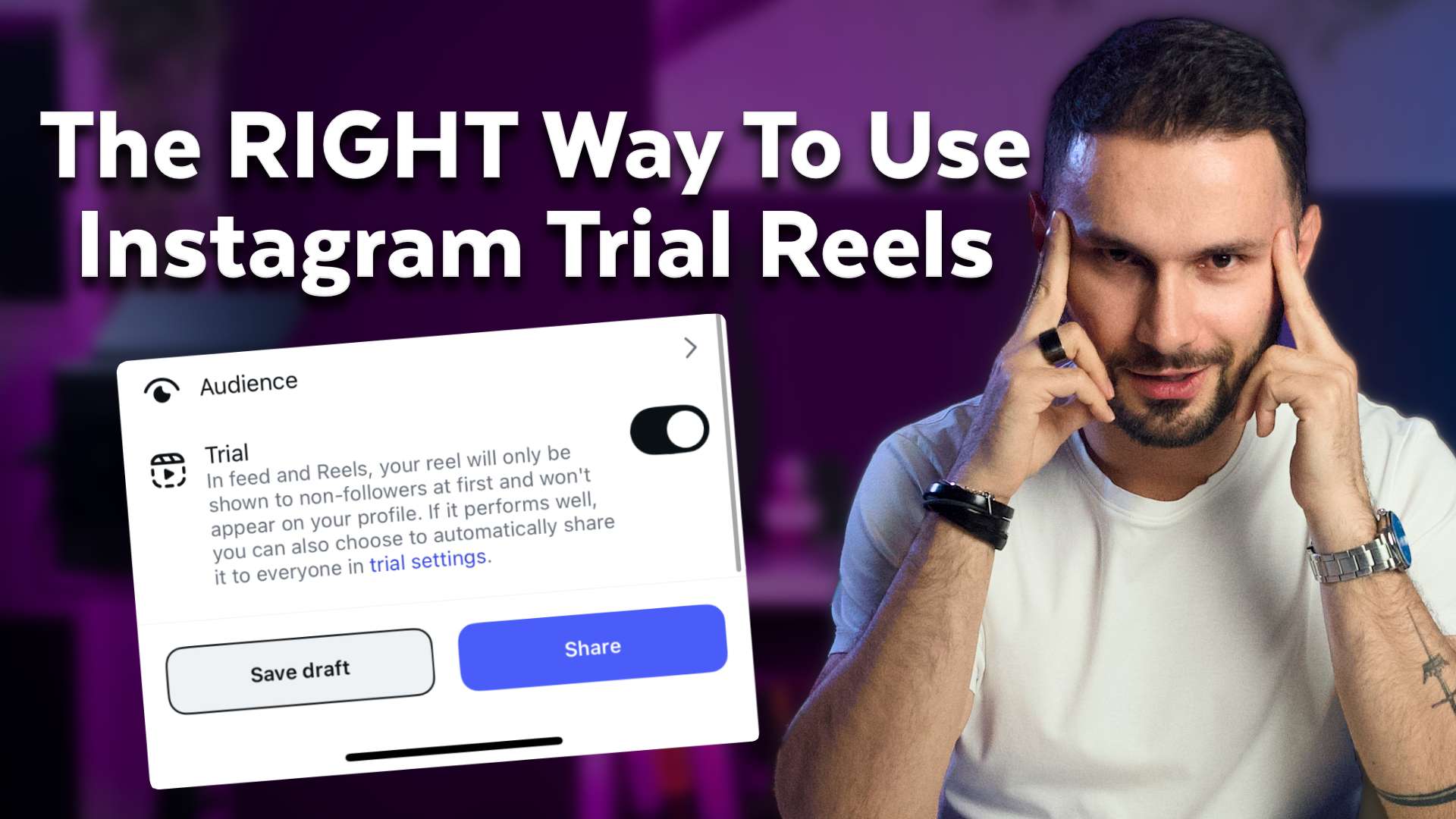
Instagram Trial Reels are a feature released by Meta to let you test new ideas, formats, or styles to a fresh, non-follower audience — without the post appearing on your main profile.
- Perfect for experimenting without “messing up your feed.”
- Trial Reels get distributed to a cold audience that hasn’t seen your content before.
- If the reel performs well, you can then publish it to everyone (followers + non-followers) with no limits on reach.
It’s a brilliant way to experiment. But as always, creators found ways to misuse it.
The Wrong Way Everyone’s Using Trial Reels
Here’s how many creators — and even big-name “experts” — tried to game the system:
1. Reposting old reels as Trial Reels.
They’d upload duplicates of their existing catalog, hoping to get fresh distribution without effort.
For a while, this worked — until Meta caught on and limited daily Trial Reel uploads.
2. Micro-edit hacks.
Creators took their best-performing reels and made tiny edits (remove a frame, change a font, tweak a color).
To the human eye, it was the same video. To the algorithm, it looked like a brand new file.
This allowed them to post 10+ variations of the same reel and get multiplied reach.
Of course, Meta isn’t stupid. Those loopholes are closed. None of these hacks work anymore.
So what now?
The Right Way: Use Trial Reels for Split Testing
Trial Reels aren’t dead. In fact, they’re more powerful than ever — if you use them correctly.
There are two smart ways to use them:
1. Experiment with new styles you normally wouldn’t risk posting publicly.
2. Run controlled split tests to find what works best.
The second option is where the real magic happens.
Think of Trial Reels as your personal testing lab. The same way marketers split test ads, headlines, or sales pages, you can now split test your content itself.
But here’s the golden rule:
Only test one variable at a time.
If you change five things at once (hook, caption, music, editing style, thumbnail), you’ll never know what actually caused the difference in results.
The Hook: Your #1 Split Test
For most creators, the single most valuable split test you can run is on your hook.
Why? Because if your hook doesn’t grab attention, nothing else matters. People will scroll past before they ever see the body of your content.
Here’s how to do it:
- Create one reel body (same caption, same thumbnail, same everything).
- Record 3–4 different hook variations.
- Post all versions as Trial Reels at the same time.
- Compare performance.
That’s it. Simple, powerful, and insanely effective
Case Study: My 3 Hook Variations
I ran this exact experiment with a reel featuring Adam Mosseri (CEO of Instagram) discussing whether saying “link in bio” hurts your reach.
Before showing his clip answering the question, I tested three hook variations:
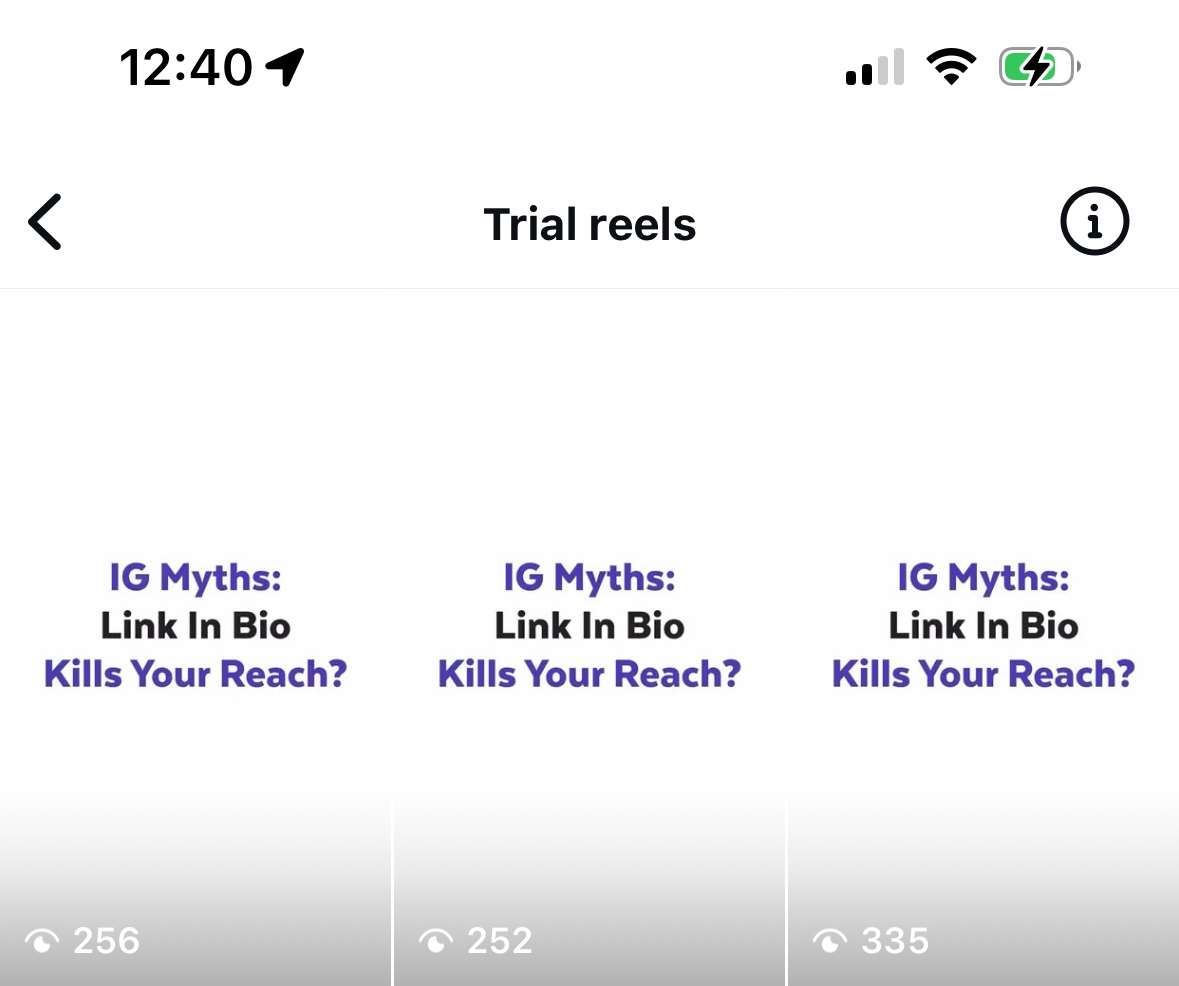
The Results:
- 256 views / 4 likes / 0 comments / 1 save / 6s average watch time / 38% view rate / 0 followers
- 252 views / 6 likes / 1 comment / 1 save / 6s average watch time / 41.8% view rate / 2 followers
- 333 views / 1 like / 1 comment / 1 save / 7s average watch time / 48.1% view rate / 1 follower
At first glance, #3 looks like the winner because it got the most views. But we need to dig deeper and look at all the metrics:
#3 had high watch time, but lowest engagement.
#2 delivered fewer views, but more likes, comments, and followers.
The lesson?
Don’t chase vanity metrics.
The best hook isn’t always the one with the most views — it’s the one that drives real engagement and conversions.
Advanced Split Tests (For Nerds Like Me)
Once you’ve mastered hooks, you can experiment split testing other variables:
- Editing pace (normal vs. fast cuts)
- Call-to-action (with vs. without ManyChat prompt).
- Numbers (round vs. oddly specific — old-school copywriting trick).
- Music vs. no music.
- Audio hook or SFX in the first seconds.
- Format (full screen vs. framed/rounded corners).
Here’s an advanced test I ran:
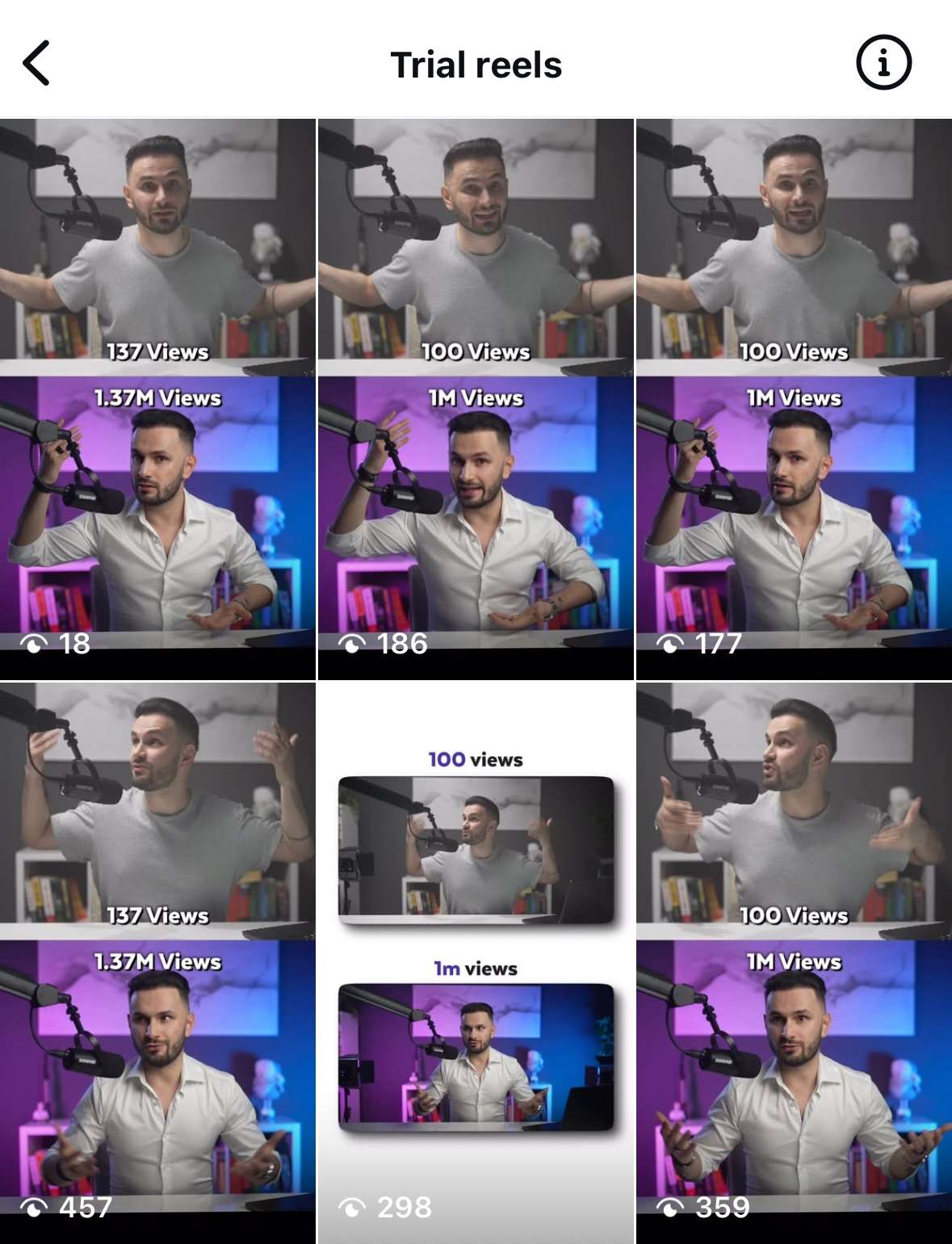
I split tested 3 variables in parallel: music vs. no music, format style, and round vs. specific numbers.
The result: music as expected, performed better.
But quite interestingly specific numbers performed way better than round ones. (for example even in sales page copy “$1,473” always beats “$1,500” — specific numbers feel more real and relatable.)
This was a copywriting rule I only read about in books. But the lesson is…
…even “rules” should be tested. Assumptions are dangerous in marketing and in content.
The Bigger Picture
Yes, all this makes Instagram more competitive.
Gone are the days when you could post a random photo and get likes. Today, low-effort content gets ignored — even by your friends.
When more creators compete for limited attention, quality has to rise. That’s basic supply and demand, economy 101.
Trial Reels give you a way to engineer quality content scientifically. Not with hacks, not with spam, but with structured experimentation.
So use them wisely:
- Test hooks.
- Test formats.
- Test one variable at a time.
Treat your content like a lab. The data never lies.
Final Note
Trial Reels aren’t a growth hack. They’re a testing framework.
Use them right, and you’ll consistently create reels that:
- Hook attention.
- Drive engagement.
- Grow your audience.
And if you want to go even deeper into hook psychology — the single most important variable in content — I break it all down in my Video Hooks Masterclass. The link is somewhere below this video.
Because in 2025, growth isn’t about guessing. It’s about testing.